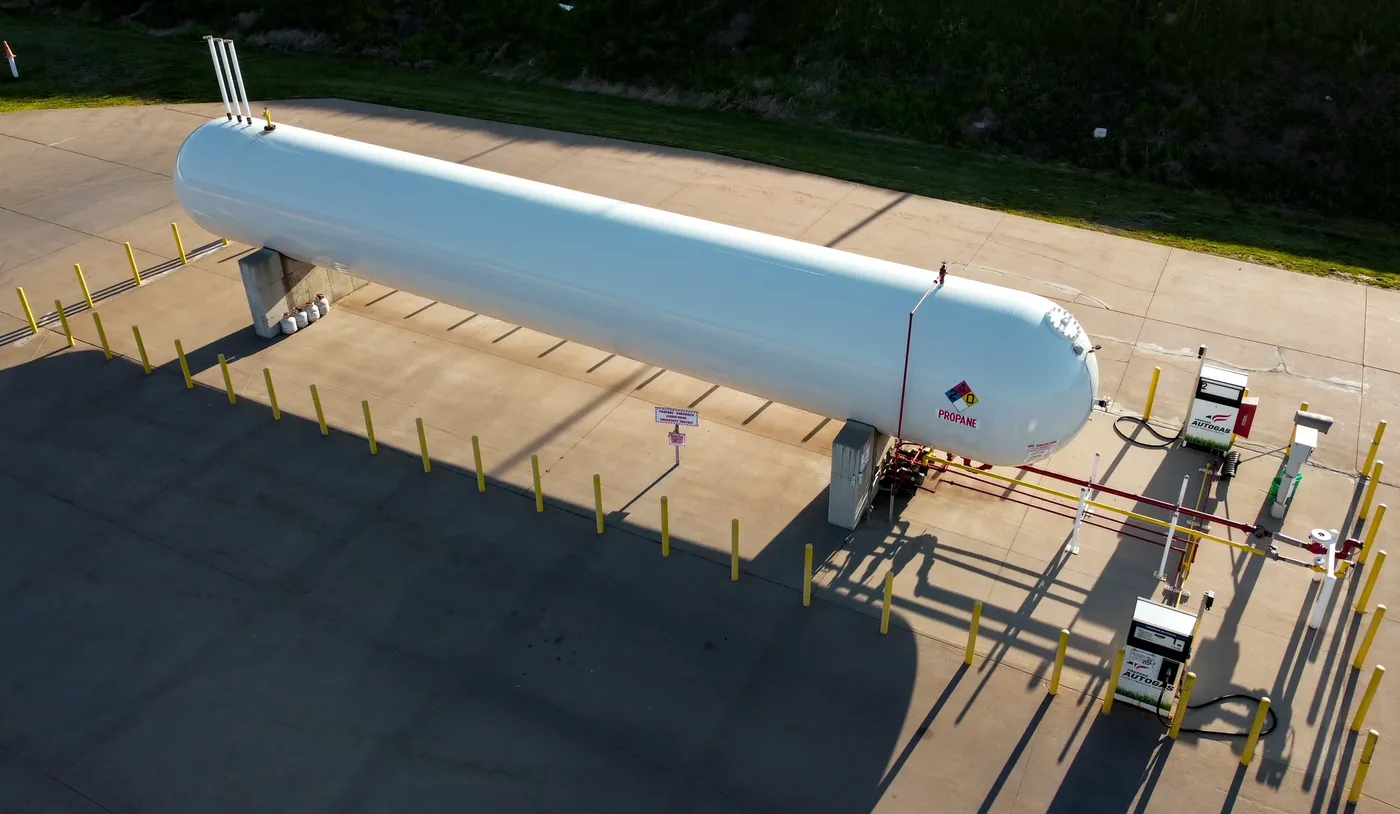
When people search “propane refill near me,” they usually want one of two things: a place that fills their existing tank by weight, or a store cage that swaps an empty for a pre-filled tank (often branded exchange programs). Those are different businesses, and AFDC’s federal locator is built mainly around fueling stations, not every retail exchange cage.
Refill (fill by weight)
A refill station puts propane into the tank you bring. Attendants typically fill by weight to the tank’s legal capacity (commonly about 80% liquid full for safety headspace). You keep your own tank. Ask about tank size limits, OPD valve requirements, and whether they refill grill cylinders, forklift tanks, or vehicle tanks.
Exchange (cage swap)
An exchange leaves your empty and takes a different filled tank from a locked cage. It is convenient and widely available at grocery and hardware stores, but you usually get a tank filled to a marketed capacity that can be less than a complete weight fill — retailers disclose their fill amounts on the cage or receipt. This site does not invent which stations are exchange-only; AFDC does not always label “exchange” as a separate fueling type.
What AFDC “primary” and “secondary” mean
In the AFDC Alternative Fueling Station data, a propane station is marked primary when it meets criteria developed with propane industry feedback: staffed and able to fuel during normal business hours without a required call-ahead, able to fill at roughly 8–12 gallons per minute (or similar to gasoline), and accepting credit or fleet cards. Stations that do not meet those criteria are secondary.
Source: AFDC — Data Included in the Alternative Fuel Stations Download (field lpg_primary).
Browse stations on this site, then verify on the official locator: AFDC propane locations.